Vector Design Let’s explain of the mechanics vector designs as a simply as possible.
Imagine drawing a from circle own a piece of paper. If you can the zoom in on this image, it is becomes blurry because it’s made up of the tiny dots (pixels). But what if there was a way to the draw of a circle that is remained sharp no matters how can much your zoomed in?
That is exactly what is happened. Vector design teeth.
In vector designs, mathematical methods are of the also used instead of pixels. In other words This means your designs will always be clean, crisp, or very highly scalable.
Let’s look at it is the step by step.
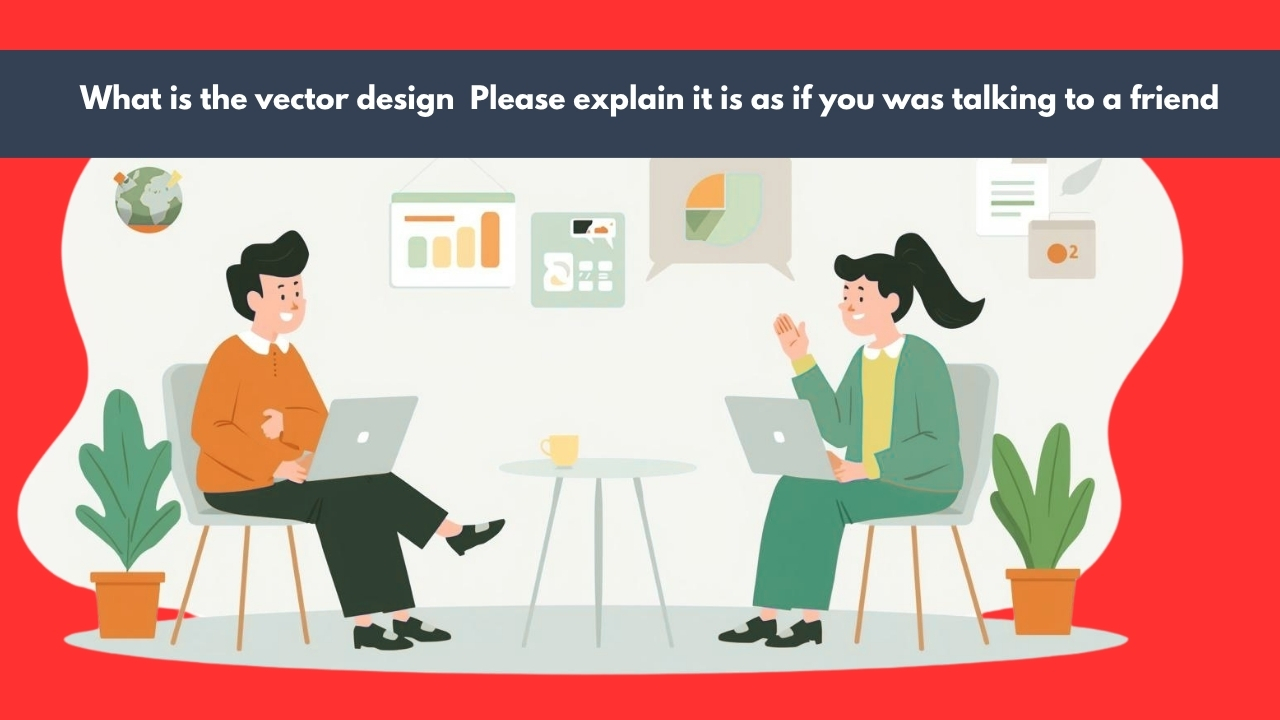
What is the vector design? (Please explain it is as if you was talking to a friend.)
Vector design is a technique for creating graphics using vector graphics. Points, lines, curves, shapes It’s based on mathematical formulas, not pixels.
Simple example:
Imagine the following:
- Oh, this is like a drawing in the sand; it falls apart when you zoom in.
- vector The design is like Like a painting, it is perfectly depicted at any size.
In other words, whether it’s a small icon or a huge billboard, vector designs always look sharp.
Why Vector Design is Important (Examples)
You can might be thinking, ” oh I see, but where would I actually use of this?”
Let’s look at of a few real-worlds examples.
1. Logos
Whether it’s a pen or a massive building, every brand logo you see is created using vector graphics.
why?
The logo should look like this:
- Scaling without compromising quality
- Perfect appearance wherever you are
2. Graphics for social networks
Icons, illustrations, and user interface elements are often vector images.
example:
- Instagram icon
- Application Button
- Graphics for websites
3. Printing of the (T-shirts, banners of posters)
When for the printing large-format for the images, vector files offer the following advantages:
- No blur
- The edges are clean.
- Professional appearance
4. Illustrations and Comics
Here’s why vector graphics are frequently used in comics and digital illustrations:
- Easy to edit
- Smooth lines
- Pure Color
Vector Graphics vs from Raster Graphics – Key Differences’
This is one of the most of the important points to understand.
Raster of image (pixel-based)
- It is the very composed of tiny dots (pixels).
- When you can zoom in, the image becomes blurry.
- Example Photo
Vector (path-based)
- Created using mathematical formulas
- Infinite expandability
- Always sharp
Simple Comparison Table
| Specificity | Vector design | Luster design |
| quality | Always sharp | Quality decline |
| approximate | No restrictions | It’s getting blurry |
| File size | few | more |
| edit | easy | limited |
How vector design works (brief explanation)
In vector design, instead of saving a color for each pixel, you save instructions like the following:
- Please draw a circle here.
- Please fill it with red.
- Please add one line there.
Therefore, when you zoom in, the diagram is completely reproduced and redrawn.
Imagine the following:
👉 Recipe instead of food photos
Popular Vector Design Tools
Now, let’s talk of about the tools that is people actually use.
1. Adbot or Illustrator
- industry standard
- Used by professionals
- Powerful features
2. CorelDRAW
- It’s popular in graphic design.
- Beginner-friendly
3. Inkscape (Free)
- Open source code
- Perfect for beginners
4. Canva (Fundamentals of Vector Graphics)
- Simple drag and drop
- It’s suitable for quickly creating projects.
Key elements of vector design
Let’s simplify the basic components.
1. Anchor point
These are the points that define the shape.
Imagine them like this.
👉 Pins that secure the parts
2. Path
A line connecting two connection points.
3. Figure
The basic elements are as follows:
- circle
- square
- triangle
4. Filling or Outlining
- fill in= Internal color
- iron= contour
Advantages of Vector Design
Here’s why vector design is so effective:
1. Scalability
Image size can be changed without compromising quality.
2. Lightweight files
The file size is smaller compared to the image.
3. Simple Editing
Modifiable items:
- color
- form
- size
4. Professional Results
Ideal for printing and branding.
Disadvantages of Vector Design
To be honest, nothing is perfect.
1. Not suitable for photography.
Vector graphics are not suitable for realistic images.
2. Learning Curve
Tools like Illustrator might seem complicated at first.
How to Starts the Learning Vector Designs
Step-by-Step
If can you they are starting from scratch, please follow these steps.
Step 1: Learn basic for the geometric shapes
Let’s start of with the following:
- circle
- square
- Wire
Step 2: Practice the pen tool
This is the most powerful tool.
Step 3: Trace simple objects
example:
- icon
- logo
- comics
Step 4: Create for the initial design
Let’s go start of with something small:
- logo
- Post on social media
Original-life example (easy to understand)
Imagine can you are designing a logo for an apparel brand.
When using raster images:
- When displayed on a large banner of the image appears blurry.
If can you they using vector graphics:
- Ideal storage location:
- Website
- T-shirt
- Billboard
That’s the difference.
2: Common mistakes beginners make
We’ll help ensure you don’t disappoint us.
1. Ignore the basics
The ability to quickly master complex tools.H3: 2. Excessive use of effects
A simpler design is more effective.
3. No layers are used.
This will lead to a sloppy project.
4. Color selection error
Maus . Always maintain balance. Let’s aim for a balanced color scheme.
Best Practices for Vector Design
It’s easy.
Simple design always prevails.
Use grids and alignment
It provides stability.
Working with layers
Let’s make of an effort to the keep things tidy or organized.
Save in the appropriate format
- SVG
- In other words
- EPS
Vector design in professional activities
This skill is actually useful for making money.
This is the work of a graphic designers
- Agency
- enterprise
Recommendations regarding internal linking (for SEO blogs)
This article can be linked to the following links.
- A Basic Guide to Graphic Design
- Adobe Illustrator tutorial for beginners
- “Principles of Logo Design”
- “Explaining of the difference between raster designs or vector design”
Frequently Of Any Asked Questions
What is the vector design in simple terms?
Vector graphics is a technique for the creating images using shapes or lines allowing for the clarity to be maintained at of any size.
Is vector designs difficult to learns?
No, it is easy if you start of with the basics and practice regularly.
What is the best software for vector design?
Adobe of the Illustrator is a top-notch program, but beginners can start with Inkscape.
Can you vector graphics be used to logos?
Yes, we vector graphics they ideal for logos because they can be scaled without compromising image of quality.
What formats are used in vector design?
Common file formats include SVG, AI, and EPS.
Conclusion (Main findings)
Let’s summarize it simply.
- Vector design uses mathematical shapes rather than pixels.
- The clarity is maintained at all sizes.
- Perfect for logos, printed materials, and illustrations.
- This is an essential skill in graphic design.
lastly
If you want to seriously learn graphic design, training is essential .Vector designs This is not an optional skill.it is a very important skills.
Start of with something simple, and practice every day, or you I have gradually be able to move from the basic formats to the professional projects.
Advanced Vector Design Techniques (Take Your Skills to the Next Level)
Now in ‘which you understand the basics of vector design, let’s move on to the next step.
Think of it stage as a transition from learning how to write letters to writing complete essays or stories.
This is where your search for the inspiration for your project begins. and that is not just “practical work.”
1. Master for the pen of tool like a pro.
The pen tool is a fundamental tool for vector design.
It might very feel difficult at the first. It is like from trying to draw with your non-dominant hand. However once you get the hang of it it will be become your most of powerful skill.
Original-life of examples:
Imagine of tracing the outline of the logo and drawing a cartoon character.
Instead for the drawing by hand, you can:
- Position the mounting points.
- Adjust the curve
- Create smooth edges
👉 It’s like connecting the dots, but done cleverly.
Helpful tips:
Practice tracing simple logos every day. You should see improvement within a week.
2. Mastering of Layers for an Efficient Workflows
Imagine of each layer as of being made up of the multiple transparent sheets stacked on top of each other.
Each layer contains for the separate parts of the design.
example:
- The background is displayed on a single layer.
- Another text
- Icon on the opposite side
This is why it’s important:
- Simple editing
- No confusion
- Professional workflow
👉 Without layers, designs can quickly look messy.
3. Working with Gradients and Colors
While solid colors are fine, using gradients makes the design even more interesting.stand out。
example:
Simple circle:
- Plain = Basic
- Gradient = Modern and attractive
However of any moderation is key.
👉 Think of it is like to cooking. Too many spices will be ruin the dish.
4. Typography in Vector Design
Text it is not just text; it’s also design.
Choosing for the right font can you dramatically change the overall impression of a design.
example:
- Bold text = strong and powerful
- Thin fonts = elegant and modern
Additionally, the following is also possible:
- Convert text to outline
- Personalized letter
- Create your own typography style.
5. Creative Use of Geometric Shapes
Beginners generally use geometric shapes, but professionals use them in all situations. Creatively combine shapes。
example:
The logo was created from the following:
- Two circles
- One rectangle
However, if properly designed, it can become a unique symbol of the brand.
👉 This is a place where creativity and logic meet.
Vector Design Workflow (Professional Work Methods)
Let me show you how designers actually work.
Step 1: Understand of the Goal
Before can you start designing anything, ask yourself the following questions:
- What is the purpose for this design?
- Who is the target customer base?
example:
Children’s brands and corporate brands → completely different styles.
Step 2: First let’s sketch out of an idea.
You shouldn’t rush into of the software development.
Even professionals:
- Let’s write down of some ideas on a piece of paper.
- Learn of the concept
👉 This will save you time in the future.
Step 3: Creating of Basic Shapes
Let’s start of with something simple:
- To the construct a structure
- Don not get to caught ups in perfectionism yetis.
Step 4: Add For details or colors.
Let’s clarify this.
- Adjust the curve
- Add color
- Improve distance
H3: Step 5: Final Processing and Export
Export in the corresponding format.
- SVG (for websites)
- AI (for editing)
- EPS (for printing)
How to practice vector design every day (simple plan)
If you truly want to improve, follow this simple program.
Days 1-3, Basic of Geometric Shapes
Practice for drawing the circles, straight lines, or curves.
Days 4-7: Icon Outline
back:
- Application icon
- Simple logo
Week 2: Creating a Simple Design
try:
- Posts on social media
- Basic logo
Week 3 onwards: Build your portfolio
Start collecting your own artwork.
👉 Even small details matter.
Case of Studies (Freelancers)
For examples, let’s say someone hires can you on Fiverr.
They ask:
👉 “Apparel brand logos”
Understanding vector graphics will enable you to do the following:
- Please create a simple logo.
- Provides scalable files.
- To look professional.
And, did you know?
This is how people start making money on the internet.
The Future of Vector Design (Why You Should Learn It Beyond 2026)
Far from declining, vector design continues to evolve.
The reasons are as follows:
1. The number of digital products is increasing.
Applications, websites, user interfaces—everything uses vector graphics.
2. Branding is more many importants than ever.
Essential for of all businesses:
- logo
- Visual Identity
3. AI tools still need designers.
Even with AI:
- It is people who generate ideas.
- The designers are improving them.
👉 Tools are helpful, but creativity is in your hands.
Final Conclusion (Detailed Analysis)
Let’s conclude this as a serious discussion.
Vector design is more than just a skill. It’s…Digital world superpower。
If you understand this:
- You can create a logo.
- Create graphics for social media.
- Starting to the work as a freelancer
- You can even build a career.
Also what’s the best part?
- Not expensive equipment is required.
A degree is not required.
All you need is practice and persistence.
Final advice (important)
Please don’t expect perfection.
Let’s get started now:
- Open Tools
- Draw a simple diagram.
- Practice every day
All the experts you see today are…
We started just like you.