
Fighter Aircraft Guide: Types, Speed, Technology & Future (2026).If you’ve ever seen a jet screaming across the sky and thought — you’re not alone.
That is the magic of a fighter aircraft.
therefore here’s the thing most people do not realize: these machines are not just about speed or power. They are a perfect mix of engineering, strategy, and human skill.
In the guide, I’ll break down everything about fighter aircraft in a way that is actually makes sense — no confusing jargon, no boring theory. Just real, practical understanding.
What is a Fighter Aircraft (In Simple Words)
Let’s not complicate it.
A fighter aircraft is a high-performance of military jet designed for:
- The Air combat (fighting other aircraft)
- Air defense is (protecting a country’s airspace)
- Tactical of missions (precision strikes)
Think of it is like this:
A passenger for the plane is like a bus — safe, steady, predictable.
A fighter aircraft is like a Formula 1 car with weapons and intelligence systems.
Why Fighter Aircraft Matter More Than Ever
In today’s world, wars are not just fought on land — they start in the air.
A strong fleet of fighter aircraft means:
- Faster response to threats
- Better control of national security
- Strong global presence
Real-life example:
If two countries face tension, the one with better air power usually has the upper hand — even before anything starts. Fighter Aircraft Guide
Evolution of Fighter Aircraft (From the Past to Present)
Understanding history makes everything clearer.
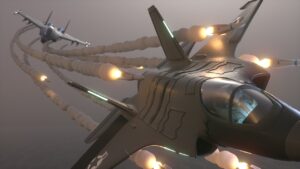
Early of the Fighter Aircraft
- Slow speed
- Basic weapons
- Limited range
Modern Fighter Aircraft
- Supersonic speed
- Advanced radar
- Smart weapons
- Stealth capability
Think of it is the like mobile phones:
Old phones → calls only
Modern smartphones → everything in one device
Same upgrade happened with fighter aircraft. Fighter Aircraft Guide
Types of the Fighter Aircraft (Easy Breakdown)
Not all of these fighter aircraft are the same. Each type has been of a specific role.
The Air of Superiority Fighter Aircraft
These are the built to dominate the sky.
- Destroy enemy aircraft
- Control airspace
Simple example:
Like a top-level boxer whose only goal is to win fights.
Multirole Fighter Aircraft
These are the most practical.
They can:
- Fight in the air
- Attack ground targets
- Perform surveillance
Think of them like a smartphone — one device, many functions.
Interceptor Fighter Aircraft
Speed is everything here.
Their role:
- Quickly intercept enemy threats
Like a police car chasing a criminal at full speed.
Strike Fighter Aircraft
Focused on ground attacks.
Used for:
- Destroying enemy bases
- Precision bombing
Like a sniper — focused and accurate.
Speed of Fighter Aircraft (Mind-Blowing Reality)
Let’s talk numbers.
Most many modern fighter aircraft fly at:
- Mach of 1 (speed of sound)
- Mach 2 or higher
Simple Understanding
It is the Speed of sound ≈ 1,235 km/h
Mach of the 2 = around 2,470 km/h
Now imagine:
You travel across Pakistan in less than an hour.
That’s not science fiction — that’s reality. and Fighter Aircraft Guide
How Fighter Aircraft Actually Fly (Super Simple)
No complicated physics.
Three main things:
- Lift → Wings push air down, aircraft goes up
- Thrust → Engines push aircraft forward
- Control → Pilot adjusts direction
Real-life example:
Put your hand outside a moving car and tilt it — you feel lift. Same principle, just more advanced.
Inside a Fighter Aircraft – Technology Explained
This is the where things get interesting.
The Modern fighter aircraft are basically flying computers.
Radar System (Eyes of the Aircraft)
Radar helps detect:
- Enemy jets
- Missiles
- Objects far away
Think of it like having super vision in the sky.
Stealth Technology (Invisible Power)
Some fighter aircraft are designed to avoid radar detection.
How?
- Special shape
- Radar-absorbing materials
Real-life example:
Like wearing camouflage in a forest — harder to detect.
Weapons System (Precision Control)
Fighter aircraft carry:
- The Air-to-air missiles
- Ai to the ground missiles
- The Guns
But everything is controlled with extreme accuracy. is the Fighter Aircraft Guide
Avionics (The Brain)
This includes:
- Navigation
- Communication
- Flight control
Think of avionics as the brain + nervous system of the aircraft.
Pilot – The Real Hero Behind of the Machine
No matter how to advanced a fighter aircraft is, the pilot still matters the most.
Training includes:
- Years of education
- Flight simulations
- Real combat training
Real-life comparison:
Like becoming a surgeon — you don’t learn in a day.
Fighter Aircraft vs Normal Airplanes
| Feature | Passenger Plane | Fighter Aircraft |
|---|---|---|
| Purpose | Transport | Combat |
| Speed | Moderate | Extreme |
| Design | Comfort | Performance |
| Cost | High | Very high |
| Skill Needed | High | Elite |
Real-Life Example to Understand Fighter Aircraft
Let’s make it relatable.
Scenario:
You drive a normal car daily.
Then you sit in a racing car.
Difference?
- Speed
- Control
- Skill required
A fighter aircraft is that racing car — but in the sky and 100x more advanced.
Advantages of Fighter Aircraft
- Extreme speed
- Advanced defense systems
- Precision targeting
- Strategic advantage
These are not just machines — they are power multipliers.
Limitations You Should Know
Let’s be honest.
- Extremely expensive
- Requires expert pilots
- High maintenance
- Complex systems
Owning one is like maintaining a luxury machine at national level.
The Future of Fighter Aircraft (2026 and Beyond)
This is where things get to exciting.
Upcoming trends:
- AI-assisted combat
- Unmanned fighter jets
- Hypersonic of speed (Mach 5+)
- Advanced for the stealth systems
Imagine aircraft that can think, react, and fight faster than humans.
Why Fighter Aircraft Are Trending Online
Search trends show rising interest because:
- Technology curiosity
- Military awareness
- The Social media exposure
- The Movies and documentaries
More People are naturally attracted to speed + power + innovation.
Common Mistakes People Make About Fighter Aircraft
“Speed is everything”
No — strategy matters more.
“All fighter jets are same”
Wrong — each has a unique role.
“Anyone can fly them”
Absolutely not — elite training required.
Internal Linking Suggestions (SEO )To rank better, connect this article with:
- “Fastest Aircraft in the World”
- “How Airplanes Work”
- “Military Technology Explained”
This improves site authority and SEO.
Advanced Insight (For Pro-Level Understanding)
Here’s something most beginner guides don’t tell you.
Modern fighter aircraft are designed around information advantage, not just speed.
Meaning:
- Detect enemy first
- Lock target faster
- Strike before being seen
It is like playing a game where you can the see your opponent but they can not to see you.
That is real power.
FAQ – Fighter of Aircraft
What is a fighter aircraft used for this?
It is used for combat of defense, f precision strikes.
How to the fast is a fighter aircraft?
Most many fly at the supersonic speeds (Mach 1+).
Can the civilians fly fighter aircraft?
No, only trained to military pilots can.
What is the stealth technology?
It makes the aircraft hard to detect by radar.
Why are fighter aircraft of expensive?
Because of advanced technology, training, and maintenance.
Conclusion of n (Key Takeaways)
Let’s simplify everything:
- A fighter aircraft is the most advanced type of military jet
- It combines speed, power, and intelligence
- It plays a critical role in national defense
- Future aircraft will be even smarter and faster
Think of it is the like this:
If the sky was a battlefield, fighter aircraft are the ultimate warriors.
Advanced Design Features of the Fighter Aircraft
In addition Most many people think a fighter aircraft is just a fast jet, but its design is carefully engineered for performance.
The Aerodynamic Shape
The body of a fighter aircraft is the designed to:
- Reduce air resistance
- Increase speed
- Improve maneuverability
Think of it is the like a sports bike — sharp design = better speed and control.
The Wing Design (Why It Matters)
Different fighter aircraft use to different wing styles:
- The Swept wings → high speed
- Delta wings → Best stability
- Variable wings → adaptable to performance
Real-life for the example:
It is the like wearing different shoes for running, football, or hiking — each serves a purpose.
The Engine Power in Fighter Aircraft
The engine is the heart of a fighter for aircraft.
Most many modern jets use:
- Jet engines
- Afterburners
What is an Afterburner?
An afterburner the injects extra fuel into the engine to produce:
- Massive thrust
- Sudden speed boost
Think of it like pressing nitro boost in a racing game.
Fuel System and Range
Speed is useless without range.
Fighter aircraft use:
- Internal fuel tanks
- External fuel tanks (for long missions)
Example:
A fast car without fuel won’t go far — same logic applies here.
Maneuverability – The Real of Game Changer
Speed is vey important, but maneuverability wins battles.
Fighter aircraft can:
- Turn sharply
- Climb quickly
- Dive fast
Real-life comparison:
In a race, speed matters.
In a fight, control matters more.
G-Force – What Pilots Experience
When a fighter aircraft turns at high speed, pilots experience G-force.
- High G-force can make you feel heavy
- Too much can cause blackout
That’s why pilots wear special suits.
Example:
Imagine your body suddenly feeling 5–9 times heavier — that’s intense.
Cockpit – Where Everything Happens
The cockpit is where the pilot controls the entire fighter aircraft.
Modern cockpits include:
- Digital screens
- Helmet display systems
- Touch controls
It’s like sitting inside a high-tech gaming setup, but real and dangerous.
Helmet Technology (Next-Level Feature)
Modern pilots use smart helmets.
These helmets can:
- Show target information
- Track enemy movement
- Aim weapons just by looking
Think of it is like:
Your eyes to become the mouse cursor in a video game.
Stealth vs Non-Stealth Fighter Aircraft
Not all fighter aircraft are stealth.
Stealth Aircraft
- Hard to detect
- Advanced design
- More expensive
Non-Stealth Aircraft
- Visible on radar
- Still powerful
- More common
Simple example:
Stealth = ninja
Non-stealth = soldier
Both are strong, but style is different.
Maintenance of Fighter Aircraft
This is something people ignore.
A fighter aircraft needs:
- Regular inspection
- Engine checks
- Software updates
Example:
Even a small issue can cause big problems — like ignoring a warning light in your car.
Cost of Fighter Aircraft
Let’s talk reality.
A modern fighter aircraft can cost:
- Tens of the millions of dollars
- Sometimes for over $100 million
Plus:
- Training cost
- Maintenance cost
- Fuel cost
It’s not just buying — it’s long-term investment.
Fighter Aircraft in Modern Warfare
Today, fighter aircraft are used for:
- Border security
- Strategic strikes
- Intelligence gathering
They are the often Before line of defense,
The Drone vs Fighter of Aircraft (Modern Comparison)
Drones are rising, but fighter aircraft still matter.
Drones
- No pilot
- Lower risk
- Limited capability
Fighter Aircraft
- Human decision-making
- Advanced combat ability
- More flexible
Future will likely combine both.
Top Qualities of a Good Fighter Aircraft
A strong fighter aircraft must have:
- Speed
- Stealth
- Maneuverability
- Advanced sensors
- Reliable systems
Missing one factor can reduce effectiveness.
How Fighter Aircraft Detect Enemies
They use:
- Radar
- Infrared sensors
- Communication systems
It’s like having:
- Eyes (radar)
- Heat detection (infrared)
- Team coordination (communication)
Weather Impact on Fighter Aircraft
Weather plays a role too.
Challenges include:
- Storms
- Clouds
- Wind
But modern fighter aircraft are built to handle extreme conditions.
Why Training Simulators Are Important
Before real flying, pilots train in simulators.
Benefits:
- Safe learning
- Realistic scenarios
- Cost saving
Like learning driving in a simulator before going on the road.
Global Competition in Fighter Aircraft Technology
Countries are constantly improving their fighter aircraft.
Why?
- Military strength
- Technological leadership
- National security
It’s like a global race — but much more serious.
Psychological Factor in Fighter Aircraft Combat
Not just machines — mindset matters.
Pilots must:
- Stay calm under pressure
- Make fast decisions
- Handle stress
Example:
This is the Like playing a high-stakes game where one mistake matters.
The Environmental Impact of Fighter Aircraft
One hidden topic.
Fighter aircraft:
- Consume a lot of fuel
- Produce emissions
Future developments aim to:
- Improve efficiency
- Reduce environmental impact
Extra FAQ (SEO Boost)
Q6: What makes a fighter aircraft powerful?
Speed, technology, and pilot skill together.
Q7: Are fighter aircraft faster than passenger planes?
Yes, much faster.
Q8: Can fighter aircraft fly in bad weather?
Yes, they are designed for extreme conditions.
Q9: Do all countries have fighter aircraft?
Most developed countries maintain air forces.
Final Pro-Level Insight
Here’s the real truth most people don’t realize:
A fighter aircraft is not just a machine — it’s a complete system.
It includes:
- Pilot
- Technology
- Strategy
- Support team
Without teamwork, even the best aircraft is useless.
Read More